

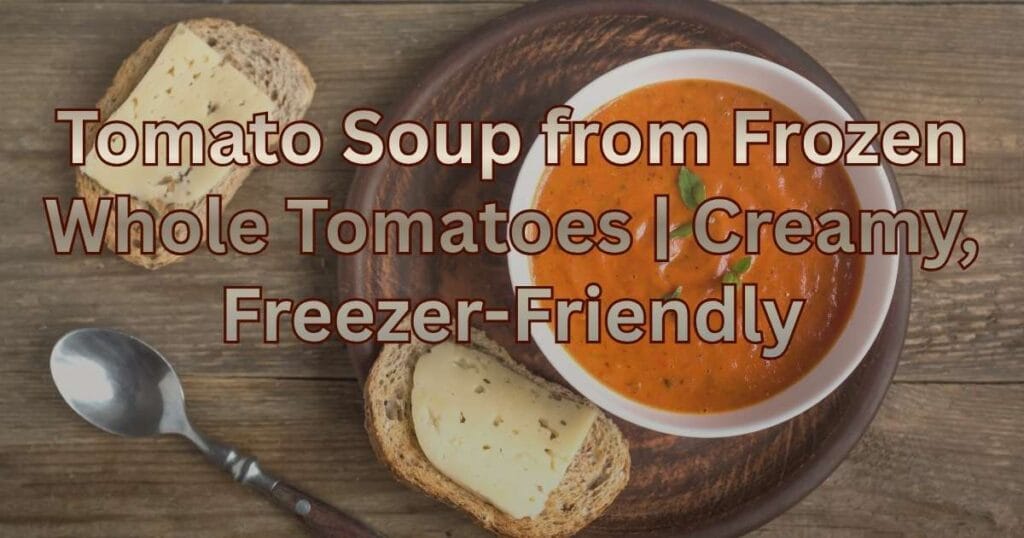
Introduction: Why frozen whole tomatoes make the best soup.
In a bowl of hot tomato soup there is something very cozy. It looks familiar, comfortable, and dependable, like your favorite sweater that you wear when the weather is cold. But here’s a twist that most people tend to overlook: Some of the best tomato soups you’ll ever make don’t start with fresh tomatoes or canned tomatoes. They start with your fridge. Frozen whole tomatoes, often overlooked or undervalued, are actually a secret weapon in making creamy, rich, highly flavored tomato soup that tastes like it’s been cooked on low heat all day, even if it’s not.
If you’ve ever grown tomatoes or bought them in bulk during peak season, you know how difficult it is. They cook together. You eat as much as you can, give some to others, and still have more tomatoes than you need. The easiest way is to freeze whole tomatoes. No one to cut. No one cooks. There is no difficult preparation. All you have to do is wash, dry and freeze. Later, when the soup season comes, those frozen tomatoes turn into something magical.
What makes this method special is how freezing changes the texture of tomatoes. The cell walls break down, which means that when they ripen, they release more flavor, more juice, and create a naturally velvety texture. That’s exactly what you need in creamy tomato soup. This recipe is also freezer-friendly in both ways. You can start with frozen tomatoes and end with a soup that freezes beautifully, making it perfect for meal prep, busy families, or someone who likes to have a comforting homemade meal ready right away.
In this guide, you’ll learn everything you need to know about making tomato soup from frozen whole tomatoes. We will talk about tips for freezing, the choice of ingredients, step-by-step cooking and ways to customize the soup to your liking. In the end, you will see that this method is not just convenient. Actually it’s better that way.
Understanding Frozen Whole Tomatoes
What Happens When Tomatoes Are Frozen
When tomatoes freeze, the water inside their cells expands. This expansion causes the cell walls to rupture. While this may seem like a bad thing to eat fresh, it’s exactly what you need for soup. After melting or heating, frozen tomatoes become soft, juicy and easily breakable. This means that cooking will take less time and the taste of tomatoes in your soup will be thicker.
Unlike fresh tomatoes, which often need to be cooked or roasted for a long time to deepen their taste, frozen tomatoes are already half-cooked. The freezing process works like a natural pre-treatment, which helps to release sugar and acid in a balanced way. That is why the taste of soup made from frozen tomatoes is richer and better without any extra effort.
Taste, texture and nutrition after freezing
A common misconception is that freezing spoils the taste or nutrition. In fact, frozen tomatoes retain most of their vitamins, especially vitamin C and antioxidants like lycopene. In some cases, lycopene becomes even more bioavailable after cooking, making tomato soup not only comforting but also truly nutritious.
In terms of texture, frozen tomatoes are not ideal for salads, but they are perfect for soups. The softness that comes from freezing eliminates the need to peel or overblend. The peels easily fall off when cooking, and the seeds become so soft that they are easily blended. The result is that the soup looks creamy even without the addition of cream.
Why whole tomatoes work better than chopped tomatoes
By freezing tomatoes completely their inner juice is preserved better than by cutting. When chopped tomatoes are frozen, they lose excess moisture and can become grainy. Whole tomatoes are frozen as a whole package, which protects their taste and structure. When you cook them later, they slowly release their juice, creating a more complex and natural tomato base for your soup.
Benefits Of Making Soup With Frozen Whole Tomatoes
Using frozen whole tomatoes is the easiest way to reduce food waste. Instead of letting the ripe tomatoes spoil, you can preserve their excellent taste. All tomatoes are used. Nothing is thrown away. This method looks good, saves money, and makes your kitchen more sustainable without any extra effort.
Year-round tomato soup with no compromises
Fresh tomatoes in winter are often pale and watery. Canned tomatoes are convenient, but they do not always give the freshness of the best tomatoes of the season. Frozen whole tomatoes make up for this deficiency. They allow you to enjoy summer-quality tomato soup even in the middle of winter, the taste of which is fresh, vigorous and original.
Budget-friendly and approved for meal prep
Buying tomatoes in season and freezing them is much cheaper than relying on canned or unseasoned fresh tomatoes. This soup is also easy to make. Make a large batch, freeze in portions, and you’ll have homemade food ready whenever you need it. This is a comfort food that works according to your schedule.
Choosing the right tomatoes before freezing
The best tomato varieties for soup
Not all tomatoes are the same when it comes to soup. Roma tomatoes, plum tomatoes, and paste tomatoes are best because they contain less water and more pulp. Heirloom tomatoes are also great, especially if you like complex, light sweet flavors. Cherry tomatoes can also be used, although from them a slightly lighter soup is made.
When to Freeze Tomatoes for Best Taste
The best time to freeze tomatoes is when they are fully ripe but still hard. Overripe tomatoes can be frozen, but they may have a slightly sour taste if they were already spoiling. Look for tomatoes that smell good, feel heavy for their size, and are dark and uniform in color.
How does cooking affect the quality of soup?
Cooked tomatoes contain a natural sweetener that balances the sourness. Raw tomatoes can make the soup tangy and sour. Frozen raw tomatoes don’t get better, so start with good quality fruit. Treat freezing as a pause button, not a cure.
How to properly freeze whole tomatoes
It is very easy to freeze whole tomatoes.
- Wash them well and dry.
- Remove all the stems.
- Place them in a single layer on a baking sheet and freeze until frozen.
- Once frozen, put them in a freezer-safe bag or container.
- Label the date, and you’re done.
Blanch or not
Blanching is an option. If you blanch the tomatoes before freezing, the peels will easily come off. However, even unblanched frozen tomatoes easily peel off when heated. As for the soup, it is not necessary to blanch and leaving it saves time.
Tips for long-term storage in the fridge
Frozen whole tomatoes are good for 10 to 12 months. Store them in an airtight container to avoid freezer burn. Removing as much air as possible keeps the flavor and texture intact.
Ingredients for creamy tomato soup from frozen tomatoes
The main ingredients explained
The beauty of this soup lies in its simplicity. Frozen whole tomatoes are its star. Onions give sweetness and depth. Garlic gives warmth. Olive oil or butter brings richness. The salt brings it all together. These basic things create a strong foundation that doesn’t need much decoration.
Optional items for depth and richness
Carrots can add natural sweetness. Cinnamon gives a mildly salty taste. Tomato paste deepens the color and taste. Fresh or dried herbs such as basil, thyme, or bay leaf add fragrance. A pinch of sugar can help balance the acidity if needed.
Dairy vs dairy-free creamy options
Cream creates a classic, luxurious texture. Milk provides a lighter option. For the dairy-free version, coconut milk, cashew cream, or oat cream work very well. Each one brings a slightly different character, allowing you to make soups to your liking.
Essential Kitchen Utensils You’ll Need
Utensils, Blenders, and Alternatives
A heavy bottomed pot is best for even cooking. You’ll also need a blender for that silky smooth texture. If you don’t have a blender, a more rustic soup can be made with a potato masher.
Immersion blender vs countertop blender
An immersion blender is convenient and has less dirt. A countertop blender gives the smoothest results but it has to be blended in batches. Both work well, so choose what you have.
things that make the process easier.
A crutch, wooden spoon, and freezer-safe container complete your setup. There’s no need for anything fancy, just reliable basics.
Step-by-step cooking method
Prepare frozen tomatoes for cooking
You can use frozen tomatoes directly from the freezer. There’s no need to sweat. As they heat up, their skin becomes loose and can be easily removed. This saves time and simplifies the process.
Creating a flavor from the base
Begin by frying the onions in olive oil or butter until soft and fragrant. Add the garlic and fry for a while. This fragrant base sets the tone for the whole soup. Take your time here. The flavor created in the beginning comes in every spoon.
Cooking, blending and finishing on low heat.
Add salt, pepper and any herbs or spices you like. Cook over low heat until everything is heated through. Remove the skin if you want. Blend until it is smooth. Add some cream or cream of your choice. Add flavorings and spices.
How to make tomato soup extra creamy
In fact, making creamy tomato soup doesn’t just mean adding cream at the end. It’s about understanding the balance, the texture and how different things go together with tomatoes. Frozen whole tomatoes give you a good start already because their soft structure is easily found, but with a few smart ways you can make your soup from good to memorable.
Cream, milk, and plant-based options
Heavy cream is the best option for creamy tomato soup. It gives richness, smoothness and a great mouthfeel that feels on the tongue. If you prefer something lighter, full cream milk also works well, though the texture is slightly thinner. Half-and-half comes in between these two.
For dairy-free options, coconut milk is the most popular choice. It gives creaminess and a light sweetness that goes very well with tomatoes. If you don’t want the taste of coconut, cashew cream is a great option. Made by mixing soaked cashew nuts with water, it forms a neutral, velvety base. Oat cream is another great option, especially if you want something mild and allergy-free.
The most important thing is to add the creamy things slowly. Add them at the end on low heat so that they do not crack and keep a smooth texture.
thickening without flour
Traditional soups sometimes rely on flour or rooh for thickening, but tomato soup does not need it. Frozen tomatoes break on their own and thicken the soup. You can also thicken the soup by adding cooked carrots, potatoes, or a small amount of cooked rice. These things thicken the soup without hiding the taste of tomatoes.
Another way is to reduce the soup a little before blending. Allowing more liquid to evaporate will thicken the flavor and improve the texture on its own.
Balancing acidity like a pro
Tomatoes are acidic in nature. The cream helps to reduce that acidity, but sometimes it needs extra help. A little sugar, honey, or grated carrots can also balance the sourness. Baking soda is sometimes used, but if used excessively, it can cause the flavor to fade. Always balance the acidity slowly and keep tasting.
Taste and customisation
One of the specialties of tomato soup is that it can be easily replaced. Once you learn the basic method, you can customize it in countless ways depending on your mood, weather, or kitchen accessories.
Classic style
For an evergreen version, use onions, garlic, basil and cream. Add a little butter at the end for extra richness. This version sounds perfect with grilled cheese and feels like a warm hug in a bowl.
Roasted Garlic And Herb Version
Roast a whole bunch of garlic until soft and caramelized, then squeeze it into the soup before blending. Add thyme, rosemary, or oregano to make the herb taste better and feel more sophisticated, but still comfortable.
Spicy, smoky, or Italian-inspired twist
If you like spicy, add red chilli flakes or a little hot sauce. For a smoky flavour, a pinch of smoked paprika or chipotle powder works wonders. In the Italian-inspired version, adding oregano, basil and a little balsamic vinegar at the end makes the taste even better.
Freezer-friendly tips: Storing and reheating
This soup is as freezer-friendly after cooking as it was before. Stored properly, it tastes just as good weeks or months later.
How to safely freeze tomato soup
Allow to cool completely before frosting. Put it in a freezer-safe container or bag, leaving a little room to spread. Label with the date. Tomato soup freezes well for up to three months, and sometimes even longer if sealed well.
The Best Containers and Portions
Freezing in different portions makes it easier to reheat. Silicone containers, flat-laid freezer bags, or glass jars designed for freezing all work well. Choose containers that suit your lifestyle and storage space.
Reheating without spoiling the texture
Bring the soup to a boil over medium-low heat, stirring occasionally. Avoid boiling, especially if the soup contains cream. If it has become too thick in the freezer, add a little broth or milk to thin it out.
Suggestions and Pairing
Tomato soup sounds great on its own, but with the right ingredients, it becomes a complete, satisfying meal.
The Best Bread, Sandwiches and Toppings
Grilled cheese is its classic partner, but crusty sourdough, garlic bread, or toasted baguette also look great. Top the soup with croutons, fresh herbs, a little cream, or grated cheese to make the texture and flavor even better.
how to make a whole soup
Add protein by serving it with sandwiches, salads, or roasted vegetables. A simple green salad with a sour vinegar dressing balances the richness of the soup beautifully.
Ideas for children and for everyone
Serve the soup in a mug to make it easier to drink or add a fun topping such as cheese shapes or mini croutons. Tomato soup is familiar and easy to make, making it ideal for a family meal.
Common Mistakes to Avoid
Even simple soups can be spoiled. Knowing what to avoid helps to get consistent good results.
Why soup becomes bitter or too sour
Bitterness often comes from burnt garlic or overcooked herbs. Sourness usually means that the tomatoes needed to be balanced. Cooking slowly and seasoning thoughtfully solves most of the problems.
Texture problems and how to fix them
Grained soups usually need more blending. There is benefit from thickening thin soup or putting vegetables in it. A thick soup can be diluted with broth or milk.
Overcooking and under seasoning mistakes
The taste of fresh tomatoes fades with excessive cooking. The taste of soup fades with less seasoning. Cook slowly and repeat several times.
Nutritional benefits of tomato soup
Tomato soup is more than just a comfort food. It gives real nutrition, especially when it is made from whole tomatoes.
Vitamins, antioxidants and rest
Tomatoes are rich in vitamin C, potassium and lycopene. Cooking increases the absorption of lycopene, making soup a smart way to enjoy tomatoes. Make it healthy without losing the taste.
Use olive oil instead of butter, choose a plant-based cream, and add lots of vegetables to the soup. The taste will not be bad.
Low in calories and high in nutrients
Tomato soup fills the stomach without being heavy. More water and fiber make you feel satisfied.
Why this recipe is perfect for busy homes
This soup easily fits into real life.
The Benefits of Meal Prep and Batch Cooking
Make it once, enjoy it many times. It reheats well and freezes easily.
make weeknight dinners easier
Low preparation, flexible timing, and easy cooking make it ideal for busy evenings.
Stress-Free Food
Knowing that you have homemade soup ready gives peace of mind.
Conclusion: A cozy bowl from your freezer to your table.
Tomato soup made from frozen whole tomatoes proves that great food doesn’t have to be difficult. With a little planning and easy ingredients, you can turn the frozen product into a creamy, comforting dish that feels homemade in the best way. It is practical, tasty and can be used in every way. Once you try it, this method will become a staple of your kitchen every season.
Frequently Asked Questions
Can I make tomato soup directly from frozen tomatoes?
Yes, frozen tomatoes can be poured directly into the pot without melting.
Do I have to take off the frozen tomato peels first?
No, the peels become loose during cooking and can be easily removed or mixed.
How long does frozen tomato soup last?
When properly stored, it lasts up to three months in the freezer.
Can I make this soup vegan or dairy-free?
Absolutely. Use alternatives to plant-based creams and olive oil.
Why does my tomato soup taste so sour?
Perhaps it needs cream, sweetener, or longer cooking.